What Is Leather Patina? Why Good Leather Looks Better With Age
One of the best things about quality leather is that it does not have to remain perfectly unchanged to stay beautiful. A wallet carried every day, a journal opened hundreds of times, or a passport holder taken from trip to trip can gradually become softer, deeper in color, and more distinctly yours.
That evolving surface is called leather patina. It is often treated as a sign of character and longevity—but it can also be confused with dirt, damage, or poor care. Understanding the difference helps you choose leather goods with realistic expectations and care for them without erasing the story they develop over time.
What Is Leather Patina?
Leather patina is the gradual change in color, sheen, texture, and feel that appears as genuine leather is handled and used. Natural oils from your hands, friction, light, moisture, movement, and routine conditioning can all influence the way the surface changes.
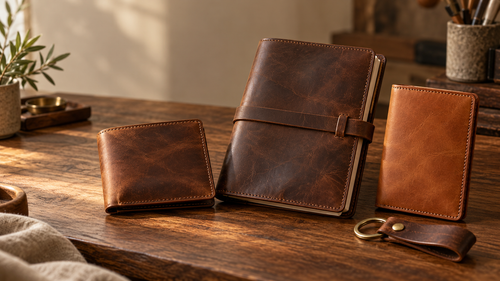
On a frequently used wallet, the edges may become smoother and slightly darker. A journal cover may develop a gentle shine where your hand rests. A keychain may deepen in color around the fold and hardware. These changes do not happen all at once, and they are rarely perfectly even.
That is part of what makes patina appealing: the item begins with the maker, but its final character is shaped by the person who owns it.
Why Some Leather Develops More Patina Than Others
Not every leather surface ages in the same way. The amount and appearance of patina depend on the hide, tannage, dyes, oils, waxes, protective finishes, color, and how the finished item is used.
Full-grain leather
Full-grain leather retains the natural outer grain rather than having that surface completely sanded away. Because the grain remains visible, natural variations can stay part of the material and later become part of its aging pattern. If you want a deeper explanation of the material itself, read our guide to what full-grain leather is and why it makes a meaningful gift.
Pull-up and waxed leather
Leather treated with oils and waxes may show temporary lighter areas when it bends, folds, or is rubbed. The oils shift within the leather, creating tonal variation. Gentle rubbing can sometimes blend light marks back into the surrounding surface. This responsive finish is one reason pull-up leather often develops a dramatic, vintage-looking patina.
Aniline and lightly finished leather
Aniline and other lightly protected leathers tend to show the natural grain clearly, but they can also absorb moisture and oils more readily. That can produce a rich patina, although it also means spills and unsuitable cleaners may leave more visible marks.
Pigmented or heavily coated leather
Leather with a stronger protective surface finish is usually more resistant to stains and color change. It may still soften and show wear, but its patina is often subtler. Neither result is automatically better—the right choice depends on whether you prefer visible character or a more uniform appearance.
Patina vs. Damage: How Can You Tell the Difference?
Patina is a gradual, functional change. Damage interferes with the structure or use of the item.
Typical signs of patina may include:
- A richer or slightly darker color in frequently touched areas
- A gentle sheen that develops through handling
- Softened edges and folds
- Small surface marks that blend into the overall character
- Increased flexibility without weakness
Possible signs of damage include:
- Deep cracking or flaking
- Leather that feels extremely dry, brittle, or stiff
- Persistent mold or a musty odor
- Loose or torn stitching
- Stretching that prevents a wallet or holder from functioning properly
- Color transfer, peeling, or sticky residue caused by an unsuitable product
A shallow scratch on waxed leather may become part of its patina. A cut that penetrates the surface is damage. Darkening from regular handling may be expected; a soaked, misshapen item that was dried on a radiator needs attention.
How Long Does Leather Patina Take to Develop?
There is no fixed schedule. A wallet carried in a pocket every day can begin changing within weeks or months, while a journal stored on a shelf may change much more slowly. Lighter colors often reveal darkening and tonal variation sooner than black or very dark brown leather.
Usage matters more than age alone. A two-year-old passport holder used twice may look newer than a six-month-old wallet handled several times every day. Climate, storage, friction, skin oils, and care products also influence the result.
This is why two items made from similar leather can look noticeably different after a year. Patina records a pattern of use rather than simply the passage of time.
How Different Leather Goods Age
Wallets and card holders
Because they are handled daily and experience pocket friction, personalized leather wallets and card holders often develop patina quickly. The corners may round slightly, the fold can become more flexible, and the most frequently touched areas may grow darker or smoother.
Journals and notebook covers
A leather journal usually develops character around the spine, closure, corners, and places where it is held. Refillable covers have the advantage of continuing to age across multiple notebooks. Browse our leather notebooks and journals to see pieces designed for years of writing and reuse.
Passport holders
A personalized full-grain leather passport holder may collect subtle reminders of each trip: softened corners, a richer tone, and faint marks from being carried in a travel bag. Between trips, correct storage is just as important as cleaning.
Keychains
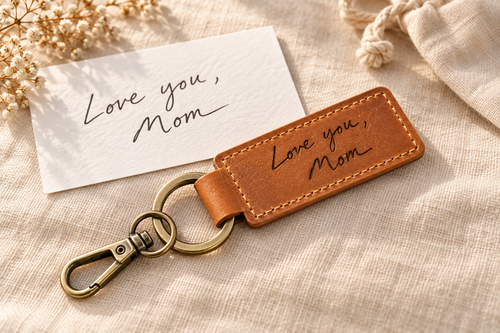
Keychains encounter hands, pockets, bags, keys, and hardware every day. Their small size and frequent handling can produce a noticeable patina, especially around the fold and ring. Explore our personalized leather keychains, or read our practical guide on how to care for a leather keychain.
How to Encourage Beautiful Patina Without Forcing It
The simplest answer is to use the item normally and care for it gently. Trying to speed up patina with heavy oils, direct sun, water, heat, or household products can create staining or structural damage rather than attractive aging.
- Keep it reasonably clean. Remove loose dust with a soft, dry cloth. If the manufacturer allows damp cleaning, use a barely damp cloth and avoid soaking the leather.
- Let wet leather dry naturally. Blot excess moisture and allow the item to air-dry at room temperature. Keep it away from hair dryers, radiators, and strong direct heat.
- Condition only when needed. Too much conditioner can darken leather, soften it excessively, or leave residue. Choose a product intended for the specific leather finish and test it first in a hidden area.
- Avoid household shortcuts. Alcohol, disinfecting wipes, perfume, detergent, furniture polish, and cooking oils can affect dyes and finishes.
- Store it with airflow. Keep leather in a cool, dry place. Avoid sealed plastic for long-term storage, damp basements, and prolonged direct sunlight.
- Accept normal variation. Natural grain, small marks, and uneven tonal changes are often part of the material—not flaws that need to be covered.
Leather Naturally recommends care methods based on the finish and notes that aniline leather should be cleaned carefully, with any product patch-tested because it may darken the color. Their leather care guide is a useful reminder that there is no single cleaner or conditioner suitable for every type of leather.
Can You Remove Patina?
You can sometimes reduce surface dirt, blend light marks, or even out dry areas, but true patina is not simply a layer sitting on top. It is part of how the material has changed through use.
Aggressive cleaning intended to make leather look “new” again can strip oils, alter color, or damage the finish. If an item has significant staining, mold, deep scratches, or sentimental value, consult a professional leather cleaner or repair specialist before experimenting.
For everyday goods, the better goal is usually not to reverse time. It is to keep the leather clean, functional, and comfortably conditioned while allowing its natural character to remain.
Does Personalization Change as Leather Ages?
Laser engraving becomes part of the leather surface rather than sitting on top like a printed layer. As the surrounding leather develops patina, the contrast may appear slightly different, but the name, date, handwriting, coordinates, or message continues to tell the same story.
That relationship is especially fitting for a personalized gift. The engraving marks a meaningful moment at the beginning, while the leather records what happens afterward.
A Material That Becomes More Personal With Time
Patina is not proof that every mark should be ignored, and it is not an excuse for poor-quality construction. It is the natural visual history that certain genuine leathers develop when they are used, handled, and cared for over time.
A good leather item should remain useful as it changes. Its color may deepen. Its surface may become smoother. Its folds may soften. And because those changes reflect one person's habits and experiences, the piece can become more personal long after the engraving is complete.
If you are choosing a gift meant to be carried and used—not simply placed on a shelf—explore JabaGift's personalized leather bestsellers and select a piece that can develop its own story.